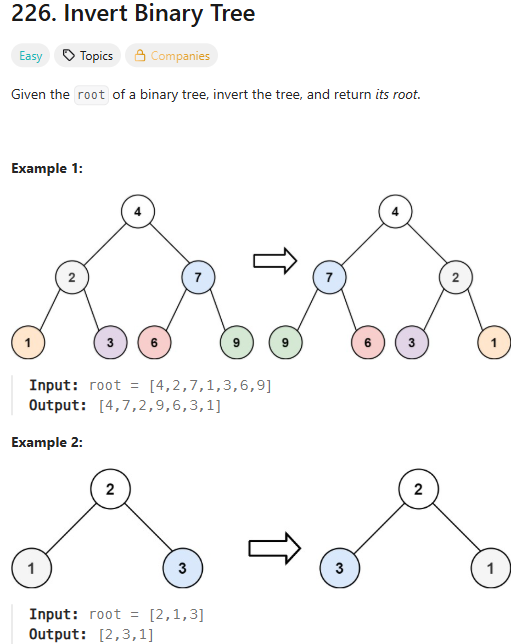
//DFS classSolution { /** * Both PreOder and PostOder traversal are correct. *Inorder is not possible, because first the left child is exchanged for *another child, then the root child is exchanged (after completion, the right *child has become the original left child), and then the right child is *exchanged for another child (at this point, it is actually exchanging for the *original left child) */ public TreeNode invertTree(TreeNode root) { if (root == null) { returnnull; } invertTree(root.left); invertTree(root.right); swapChildren(root); return root; }
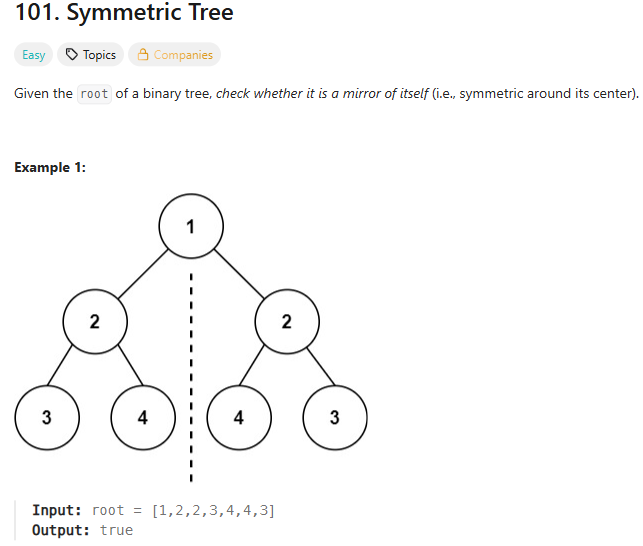
//To compare two nodes with different values, first clarify the situation where the two nodes are empty! Otherwise, when comparing numerical values later, the null pointer will be manipulated. if (left == null && right != null) { returnfalse; } if (left != null && right == null) { returnfalse; }
if (left == null && right == null) { returntrue; } if (left.val != right.val) { returnfalse; } //TheThe logic of single-layer recursion is to handle situations where both left and right nodes are not empty and have the same value. // Compare outside booleancompareOutside= compare(left.left, right.right); // Compare inside booleancompareInside= compare(left.right, right.left); return compareOutside && compareInside; }
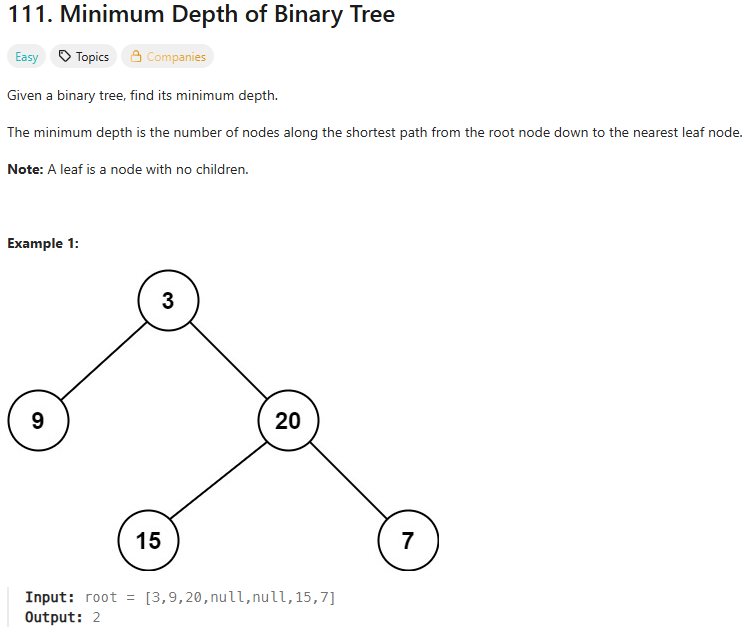
//DFS classSolution { /** * The minimum depth is the number of nodes along the shortest path from the * * root node down to the nearest leaf nod */ publicintminDepth(TreeNode root) { if (root == null) { return0; } intleftDepth= minDepth(root.left); intrightDepth= minDepth(root.right); if (root.left == null) { return rightDepth + 1; } if (root.right == null) { return leftDepth + 1; } // Both left and right nodes are not null return Math.min(leftDepth, rightDepth) + 1; } }
//BFS classSolution { publicintminDepth(TreeNode root) { if (root == null) { return0; } Deque<TreeNode> deque = newLinkedList<>(); deque.offer(root); intdepth=0; while (!deque.isEmpty()) { intsize= deque.size(); depth++; for (inti=0; i < size; i++) { TreeNodepoll= deque.poll(); if (poll.left == null && poll.right == null) { // It is a leaf node that directly returns depth. Because it is traversed from top to bottom, this value is the minimum value return depth; } if (poll.left != null) { deque.offer(poll.left); } if (poll.right != null) { deque.offer(poll.right); } } } return depth; } }
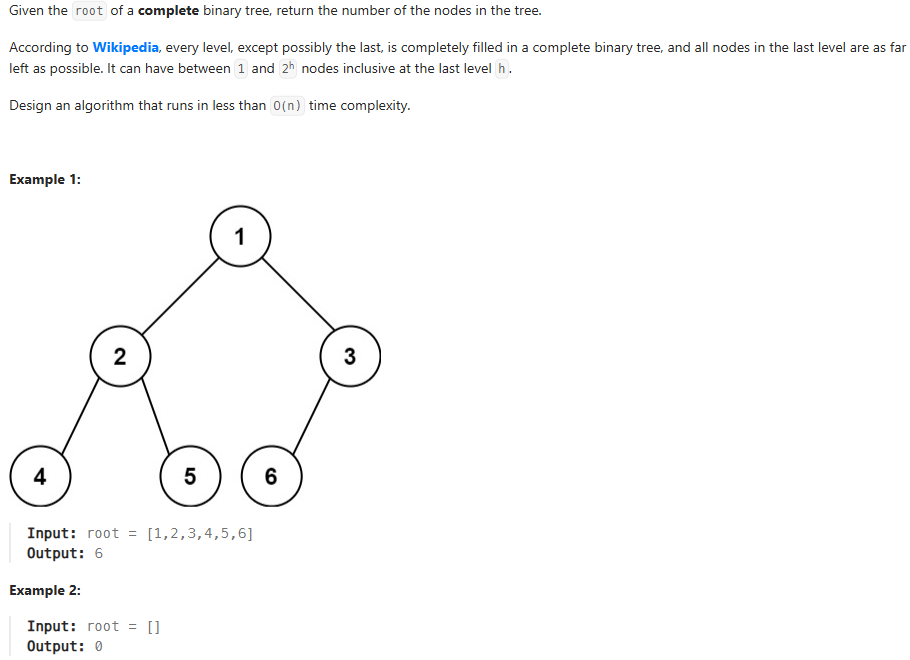
classSolution { publicintcountNodes(TreeNode root) { if(root == null) { return0; } // we need use postorder traversal to first calculate left node and then right node and then the return countNodes(root.left) + countNodes(root.right) + 1; } }
classSolution { publicintcountNodes(TreeNode root) { if (root == null) return0; Queue<TreeNode> queue = newLinkedList<>(); queue.offer(root); intresult=0; while (!queue.isEmpty()) { intsize= queue.size(); while (size -- > 0) { TreeNodecur= queue.poll(); result++; if (cur.left != null) queue.offer(cur.left); if (cur.right != null) queue.offer(cur.right); } } return result; } }
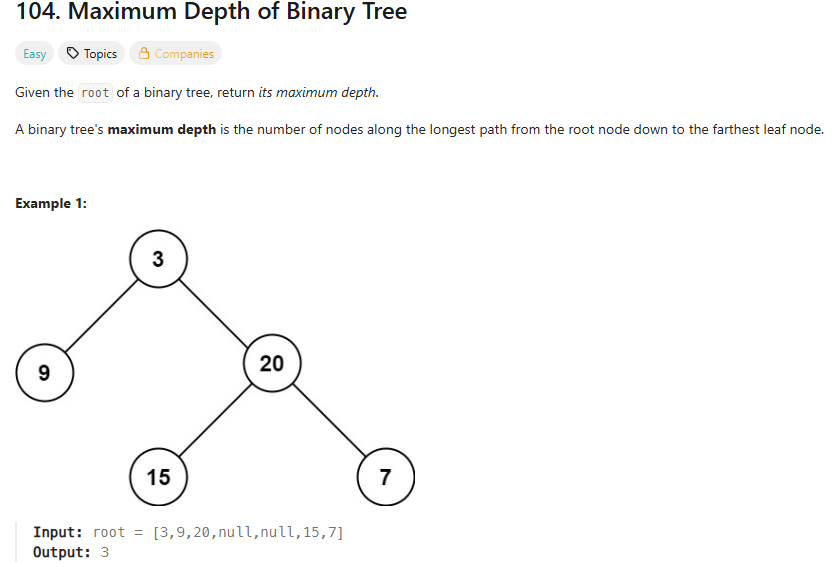
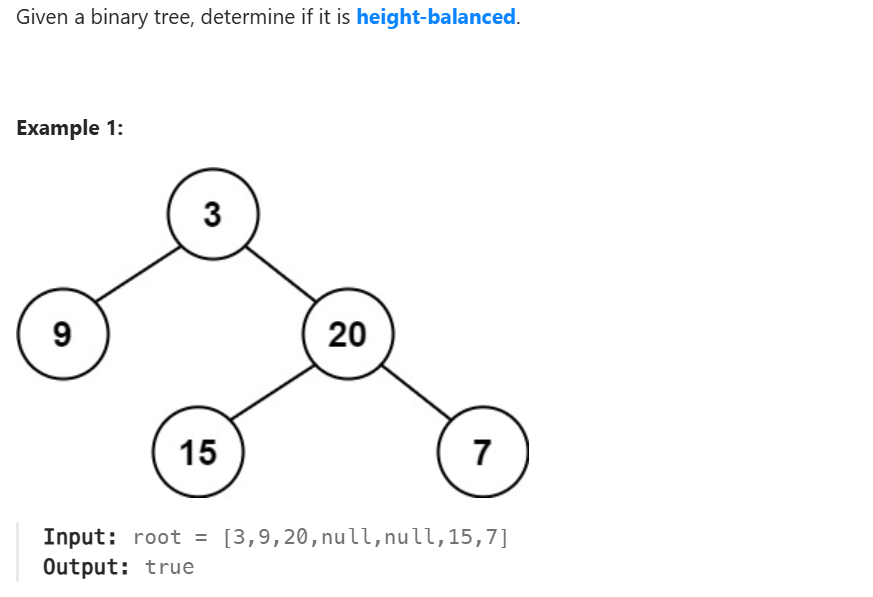
privateintgetHeight(TreeNode root) { if (root == null) { return0; } intleftHeight= getHeight(root.left); if (leftHeight == -1) { return -1; } intrightHeight= getHeight(root.right); if (rightHeight == -1) { return -1; } // If the height difference between the left and right subtrees is greater than 1, return -1 indicates that it is no longer a balanced tree if (Math.abs(leftHeight - rightHeight) > 1) { return -1; } return Math.max(leftHeight, rightHeight) + 1; } }
classSolution { public List<String> binaryTreePaths(TreeNode root) { List<String> res = newArrayList<>(); if (root == null) { return res; } List<Integer> paths = newArrayList<>(); traversal(root, paths, res); return res; }
privatevoidtraversal(TreeNode root, List<Integer> paths, List<String> res) { paths.add(root.val);// PreOder--> mid // If we find the leaf node then we need to collect one possible path if (root.left == null && root.right == null) { // StringBuilder is used to concatenate strings, which is faster StringBuildersb=newStringBuilder(); for (inti=0; i < paths.size() - 1; i++) { sb.append(paths.get(i)).append("->"); } // Add last node since we don't need -> sb.append(paths.get(paths.size() - 1)); res.add(sb.toString());//add one path return; } // Recursive and backtracking occur simultaneously, so they should be placed in the same curly braces if (root.left != null) { // left traversal(root.left, paths, res); paths.remove(paths.size() - 1);// BackTracking } if (root.right != null) { // right traversal(root.right, paths, res); paths.remove(paths.size() - 1);// Backtracking } } }
//BFS classSolution { public List<String> binaryTreePaths(TreeNode root) { List<String> result = newArrayList<>(); if (root == null) return result; Stack<Object> stack = newStack<>();
stack.push(root); stack.push(root.val + ""); while (!stack.isEmpty()) { Stringpath= (String) stack.pop(); TreeNodenode= (TreeNode) stack.pop(); // leaf node if (node.left == null && node.right == null) { result.add(path); } //the right child node is not null if (node.right != null) { stack.push(node.right); stack.push(path + "->" + node.right.val); } //the left child node is not null if (node.left != null) { stack.push(node.left); stack.push(path + "->" + node.left.val); } } return result; } }